The owner brought this strap in because the leather had started to crease beside a plastic insert. Small cracks were appearing along the edges, raising the risk that the valuable outer alligator leather could eventually break. The real cause was not visible until the strap was taken apart.
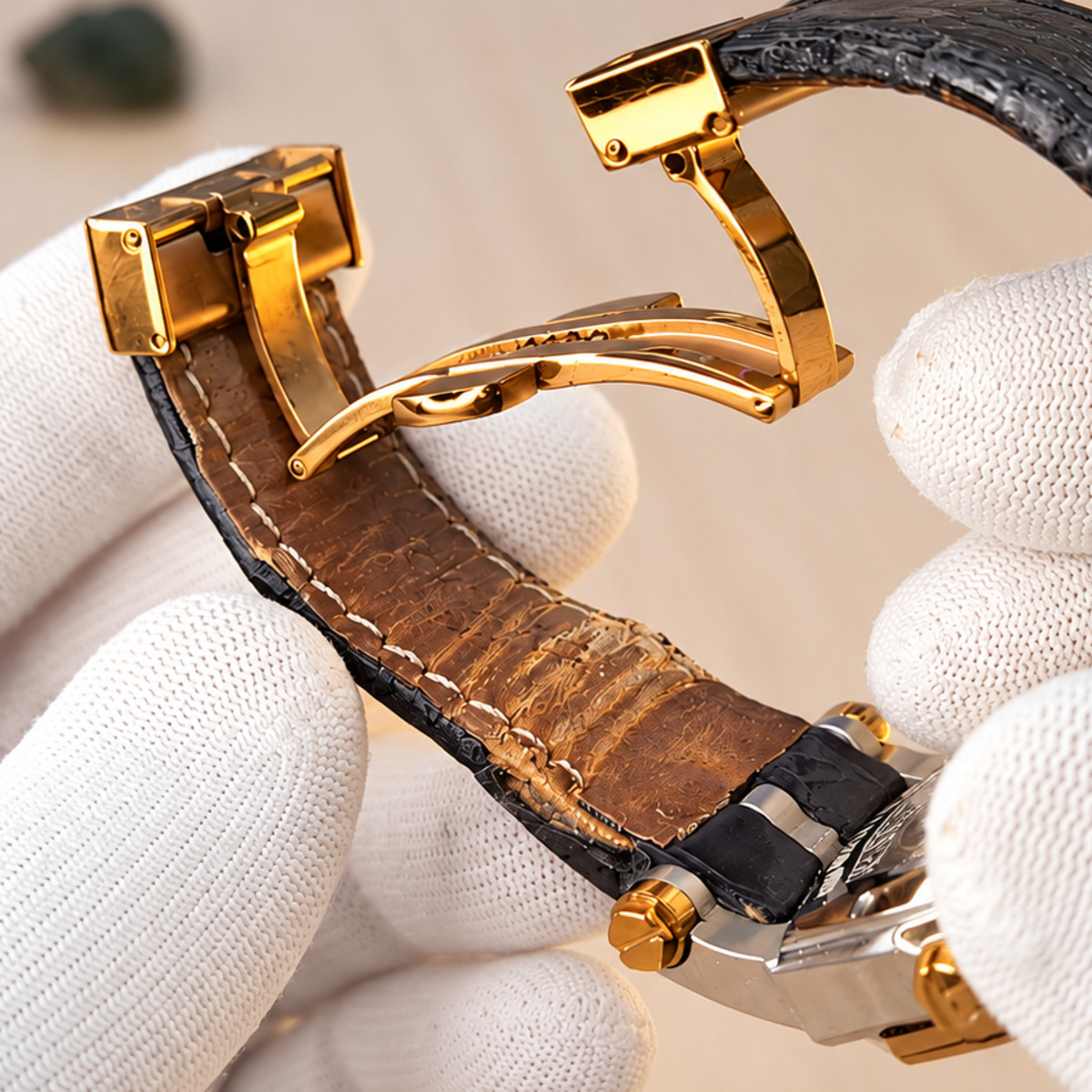
The warning sign the owner noticed
The alligator leather had not yet snapped across the strap, but the area near the plastic insert was developing a pronounced crease and the edges were starting to crack. The owner wanted to save the original outer skin before the damage progressed further.
At first glance, this might look like a surface repair: treat the cracks, refresh the black colour and finish the edges. But a visible crease can be the result of a problem beneath the leather. Before doing any cosmetic work, I needed to open the strap and find out what was allowing it to bend at that point.
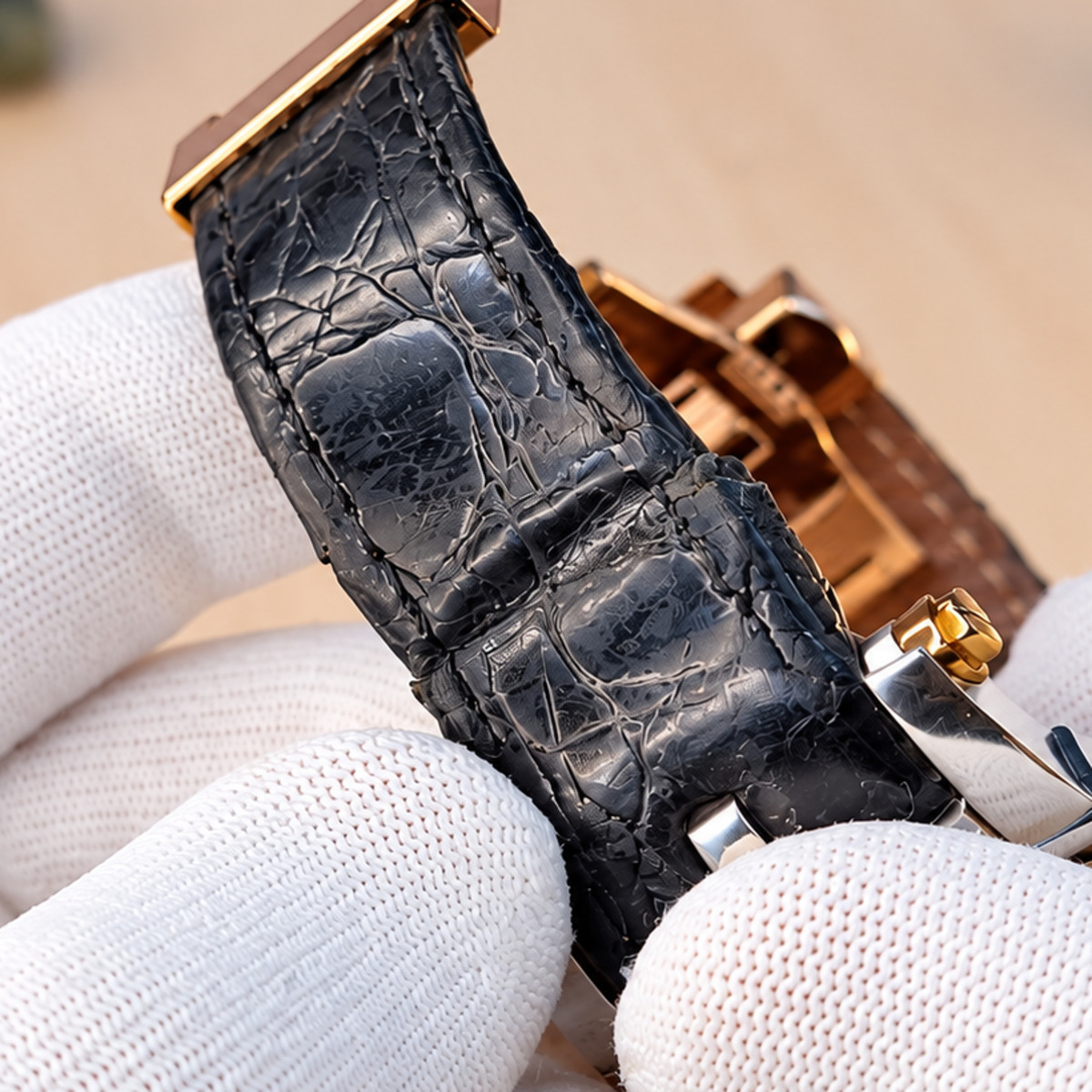
The main failure was inside: dry, fractured cardboard
I detached the strap from the Rochas Paris watch, removed the folding clasp and cut the old edge stitching to separate the layers. Once the lining was lifted away, the source of the damage became clear.
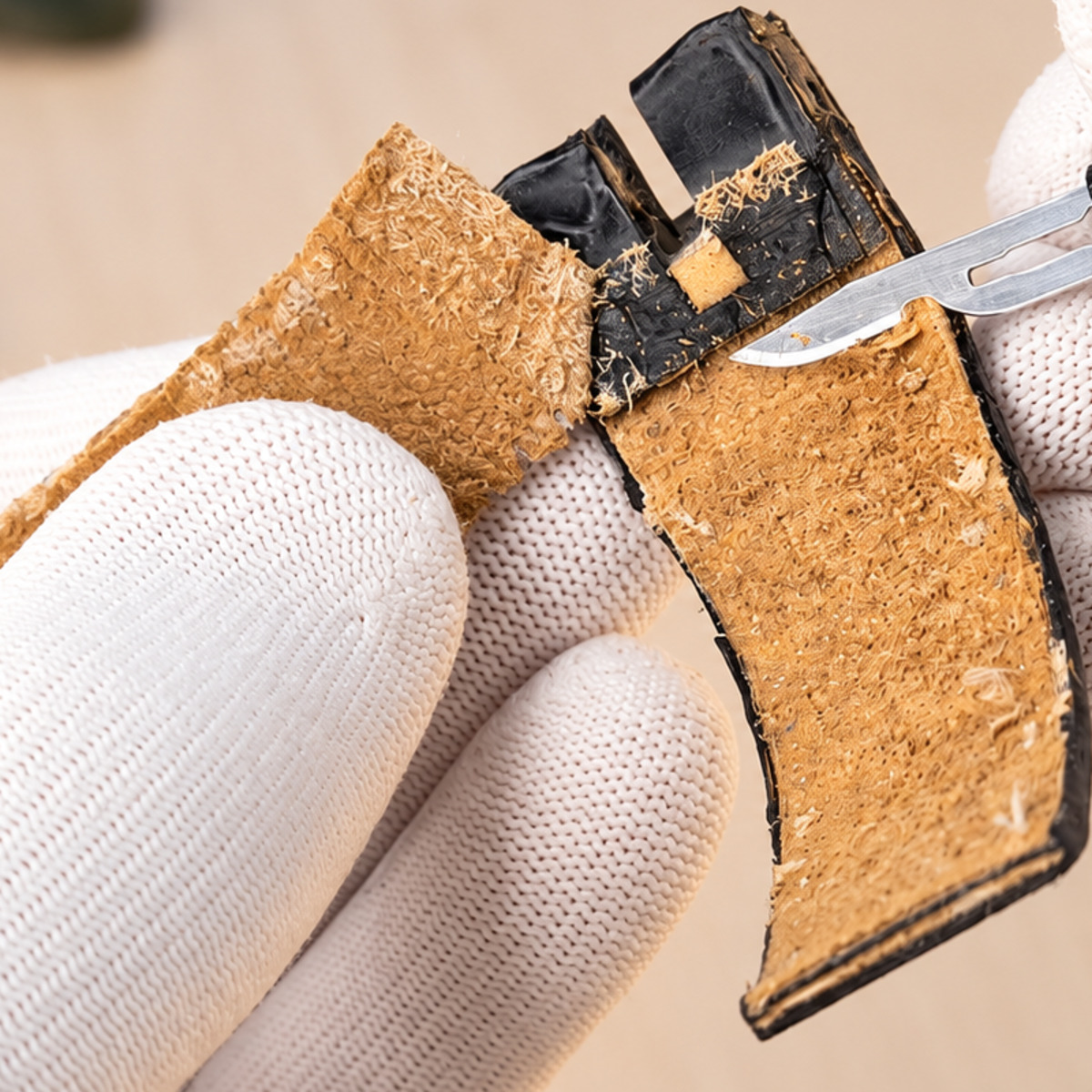
One of the internal structural layers was cardboard. Over time it had dried out, become brittle and cracked across the width of the strap. The inner structure failed first, followed by damage to the lower leather layer. The resulting bend then put stress on the outer alligator leather, which was beginning to crease and crack at the edges.
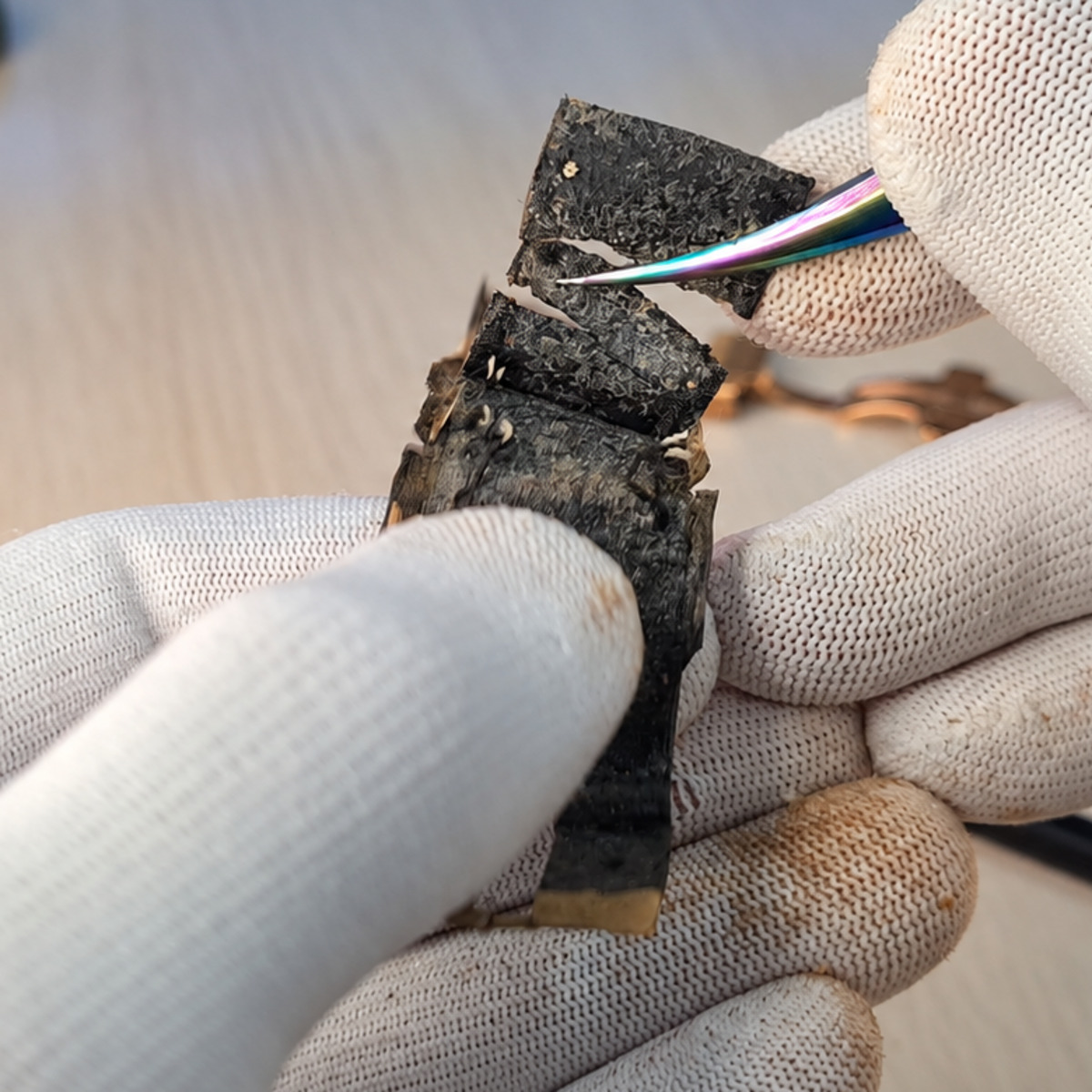
That sequence matters. Recolouring the outer leather would not remove the broken cardboard beneath it. The strap would still have a weak point exactly where the owner had noticed the crease.
A second discovery: a lengthwise crack in the plastic insert
The disassembly revealed another issue. A small translucent, shaped plastic insert near the watch case had also broken, but along its length.
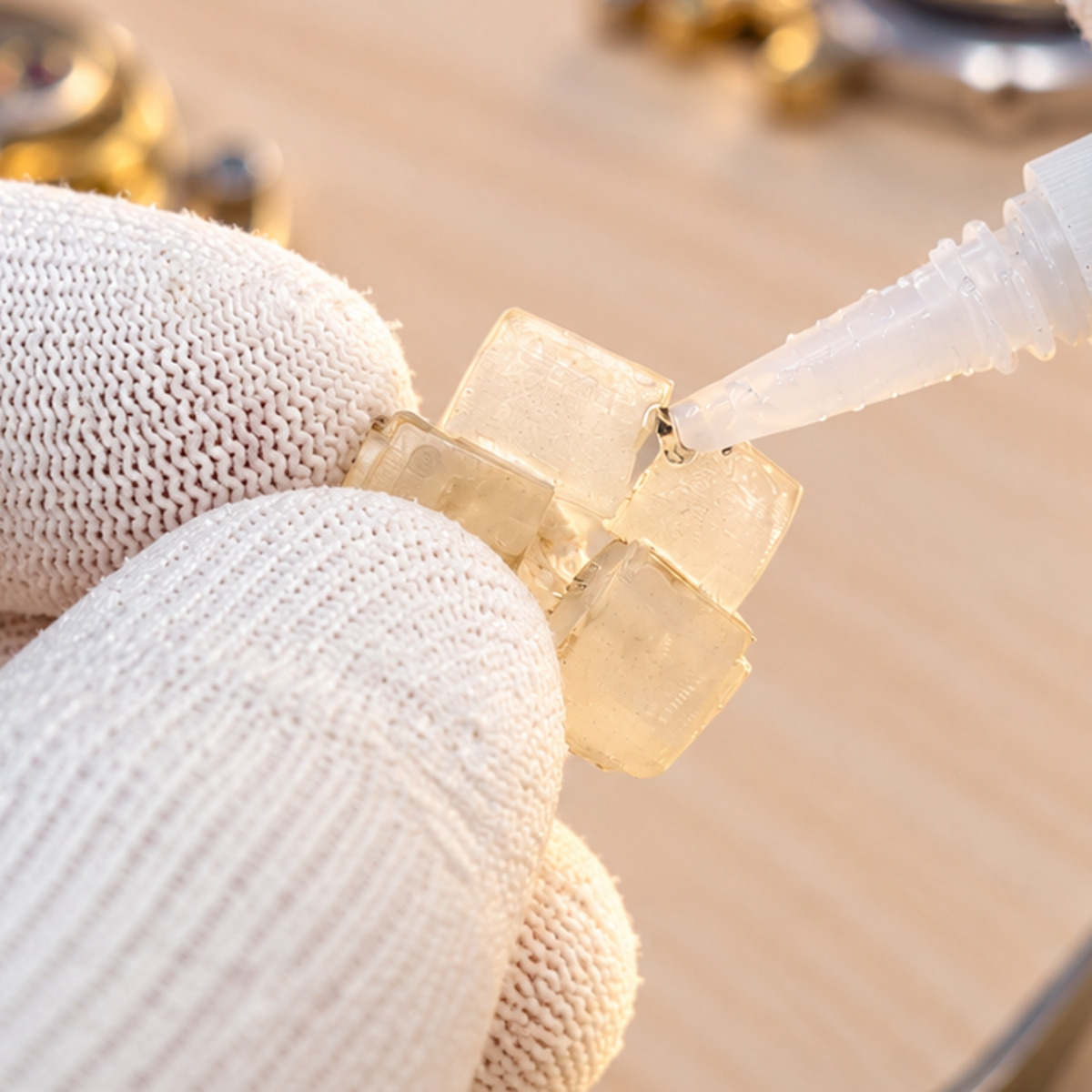
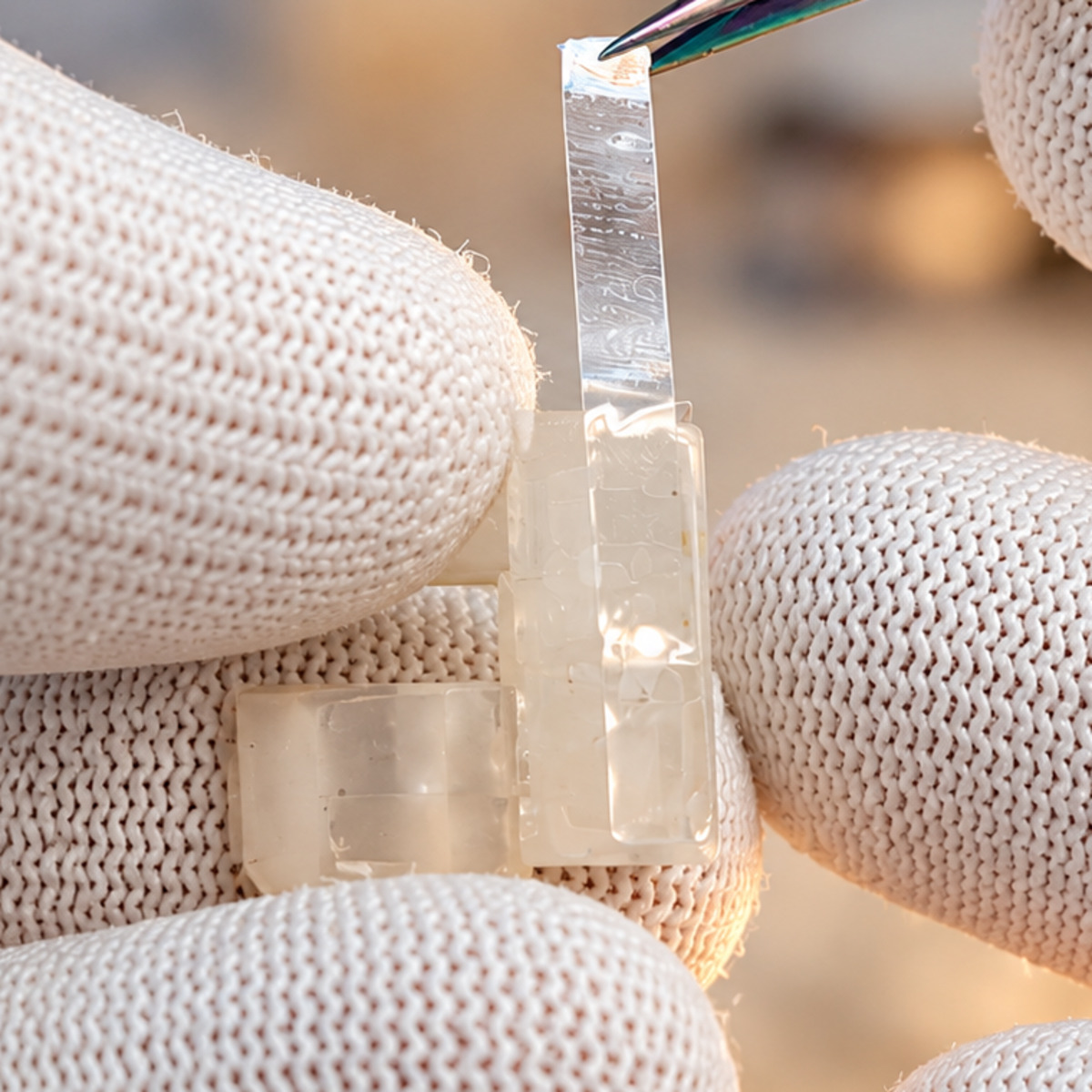
So the main crack in the cardboard ran across the strap while the insert had split lengthwise. These were two different directions of weakness — almost a cross-shaped pattern of damage. It is possible that the broken insert allowed additional lengthwise flexing and made the situation worse. However, that is a plausible contributing factor, not a proven explanation for the main transverse crack.
In the video I align the insert fragments, bond them and reinforce the repair with small transparent pieces. That work had to be completed before the layers were assembled again.
Why a cosmetic repair would have failed
Filling the visible cracks and applying fresh black finish might have made the strap look better for a while. It would not have stopped the damaged cardboard inside from folding at the same weak point.
The goal was to preserve the original alligator leather. That meant addressing the failed internal structure first, even though replacing the strap altogether would have been simpler.
Replacing the cardboard with flexible leather
I removed the dry, broken cardboard and replaced that internal layer with strong, flexible leather. This was the essential structural repair: the new core needed to flex with the strap instead of snapping at a brittle point.
The original alligator leather was retained. I restored the shaped plastic insert, brought the internal layers back together and rebuilt the strap around the surviving outer leather. The work was no longer just about hiding damage — it addressed why the visible damage had started.
Restoring the original alligator leather
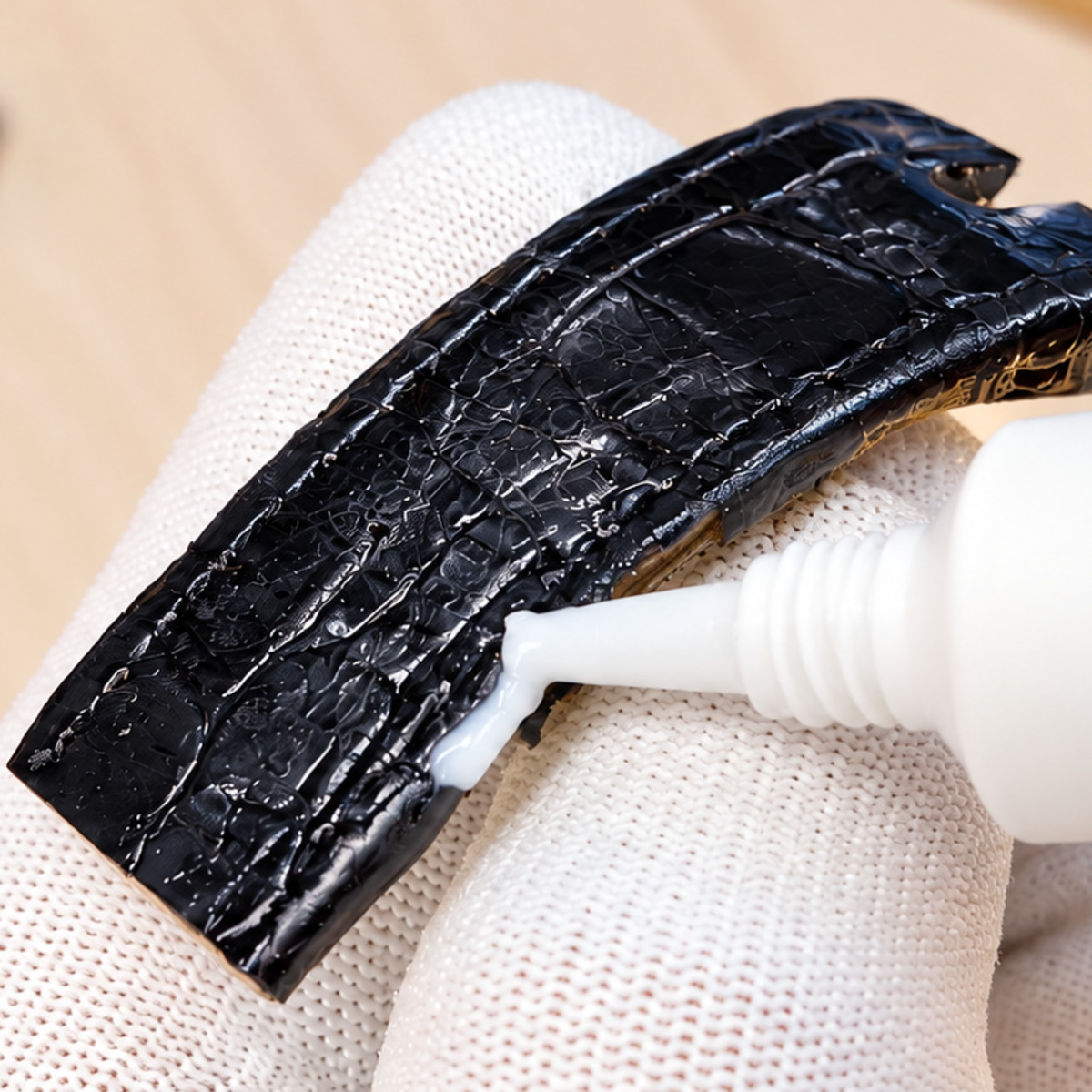
Only after dealing with the internal structure did I move on to the exterior. The leather was cleaned with foam and a brush, prepared for refinishing, recoloured in black with a brush and airbrush, and finished with protective coats. Those stages are visible in the film.
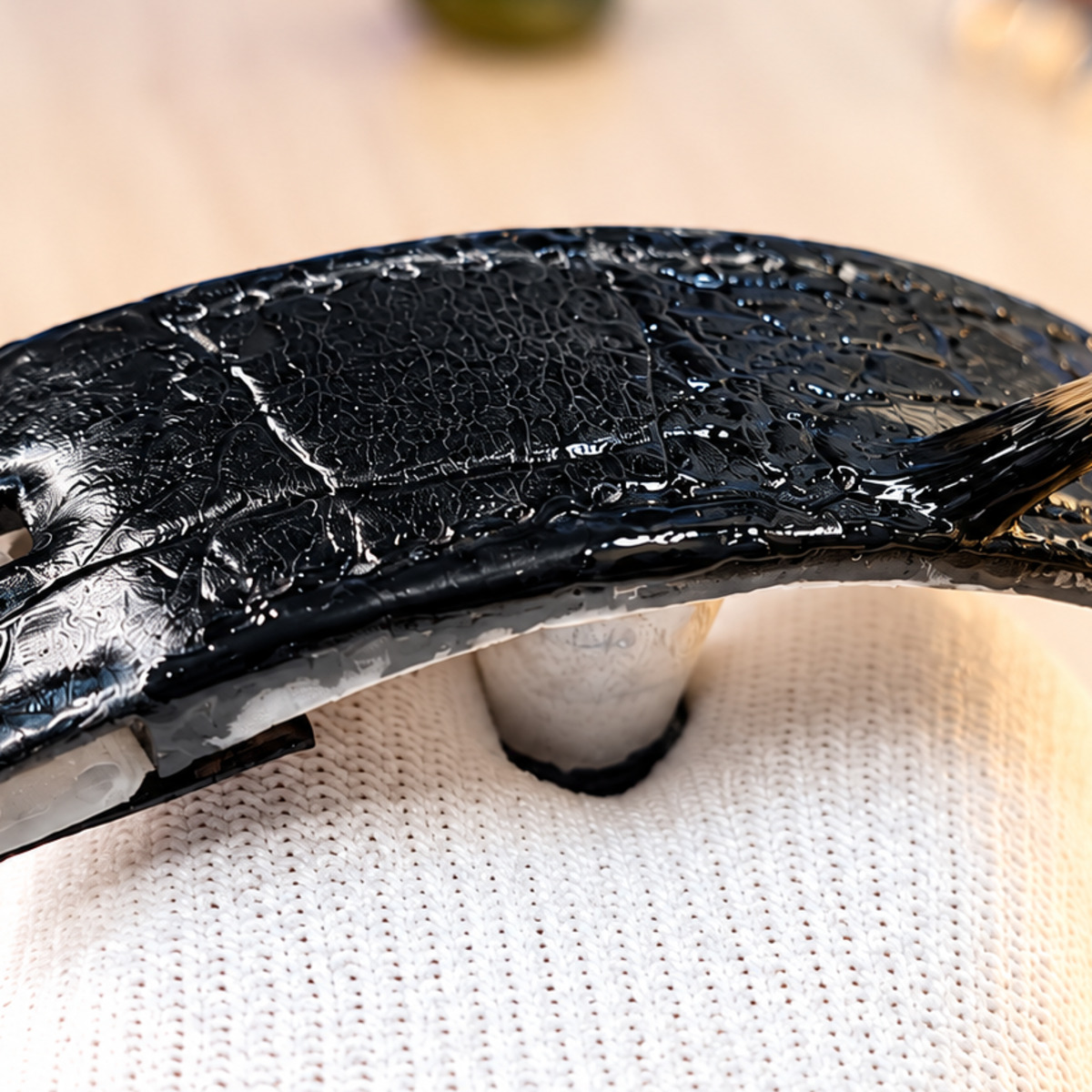
This ASMR restoration video does not disclose every product, formulation or preparation detail. It documents an actual workshop job rather than providing a complete chemical recipe.
New lining, hand stitching and reassembly
I cut and fitted new tan leather lining pieces and bonded them to the rebuilt strap. The perimeter was then hand-stitched with two needles and light-coloured thread.
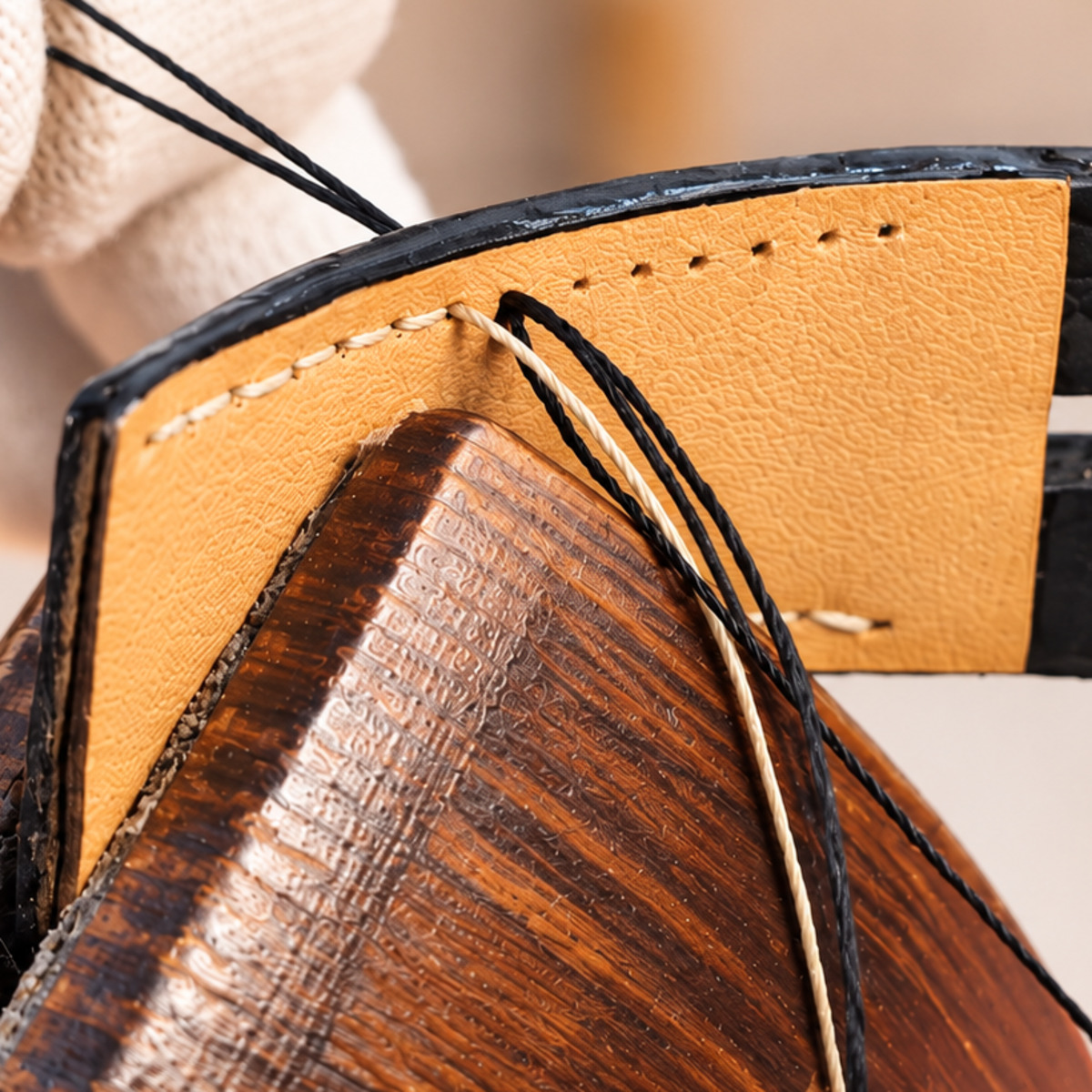
Finally, I reattached the folding clasp and secured the strap to the watch. The before-and-after comparison shows a renewed finish, but the most important change cannot be seen from outside: the brittle cardboard has been replaced by a new leather core.
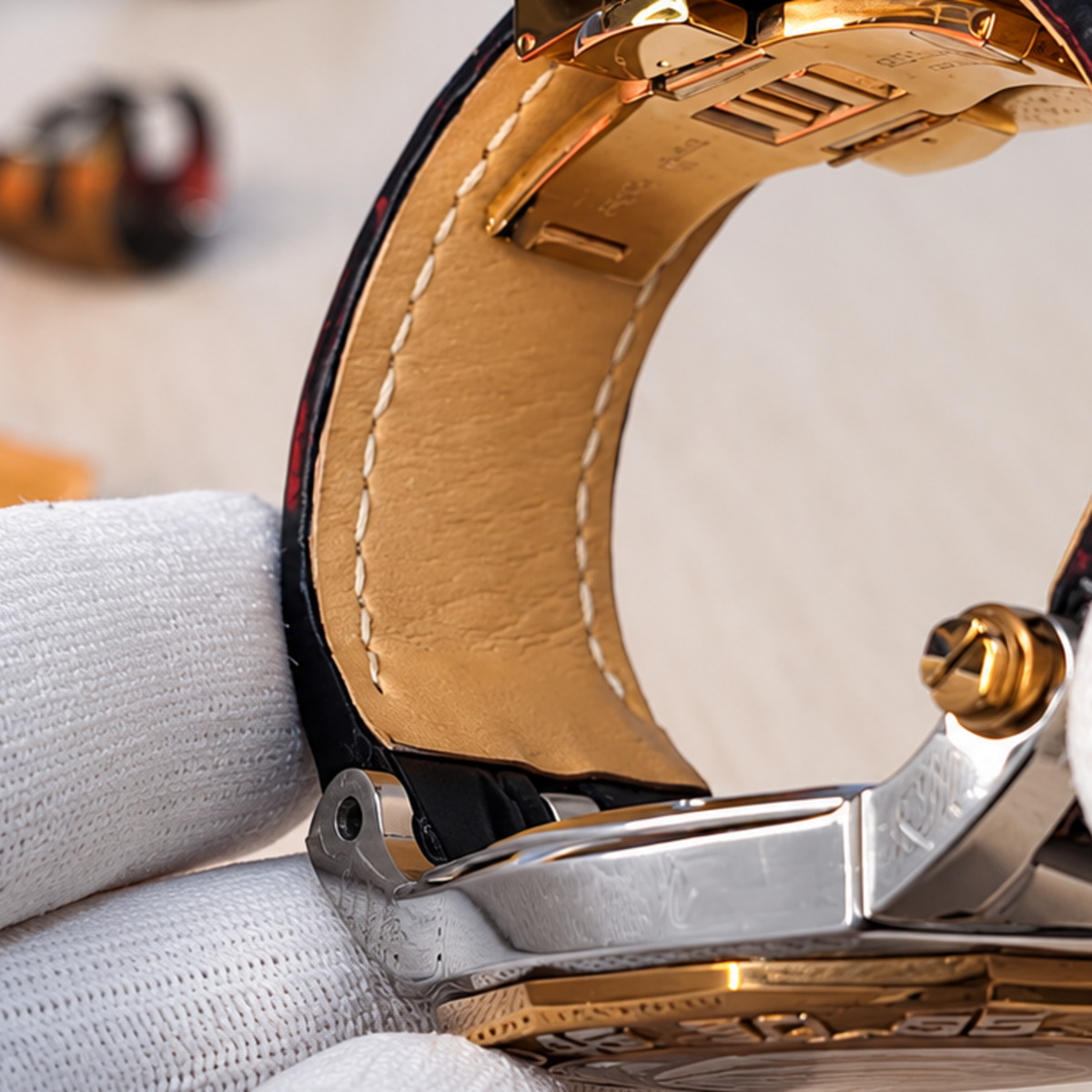
The result: fixing the cause, not only the surface
The visible damage did not start on the surface. In this case the alligator leather was being stressed by a failed internal layer, so the repair had to begin with the source of the crease, not the appearance of the cracks.
This is why understanding construction matters as much as cleaning or recolouring. The security of attachment points should also be checked before putting any repaired watch strap back into regular use.
What this case shows about leather restoration
This small repair required several different decisions: identify how the inner layers failed, assess the risk to the original alligator leather, deal with a broken insert, replace the core and only then restore the finish.
That is the approach behind Repair Show Academy. Basic covers materials, preparation, leather repair and colour restoration; Basic + PRO adds complete, real-project demonstrations. The video above documents workshop work, while the detailed techniques are taught in the courses.
Based on the Repair Show restoration video published October 6, 2026, together with the craftsman’s account of the owner’s initial concern and the damage found during disassembly. The possible contribution of the lengthwise plastic fracture is presented as a hypothesis, not an established cause.