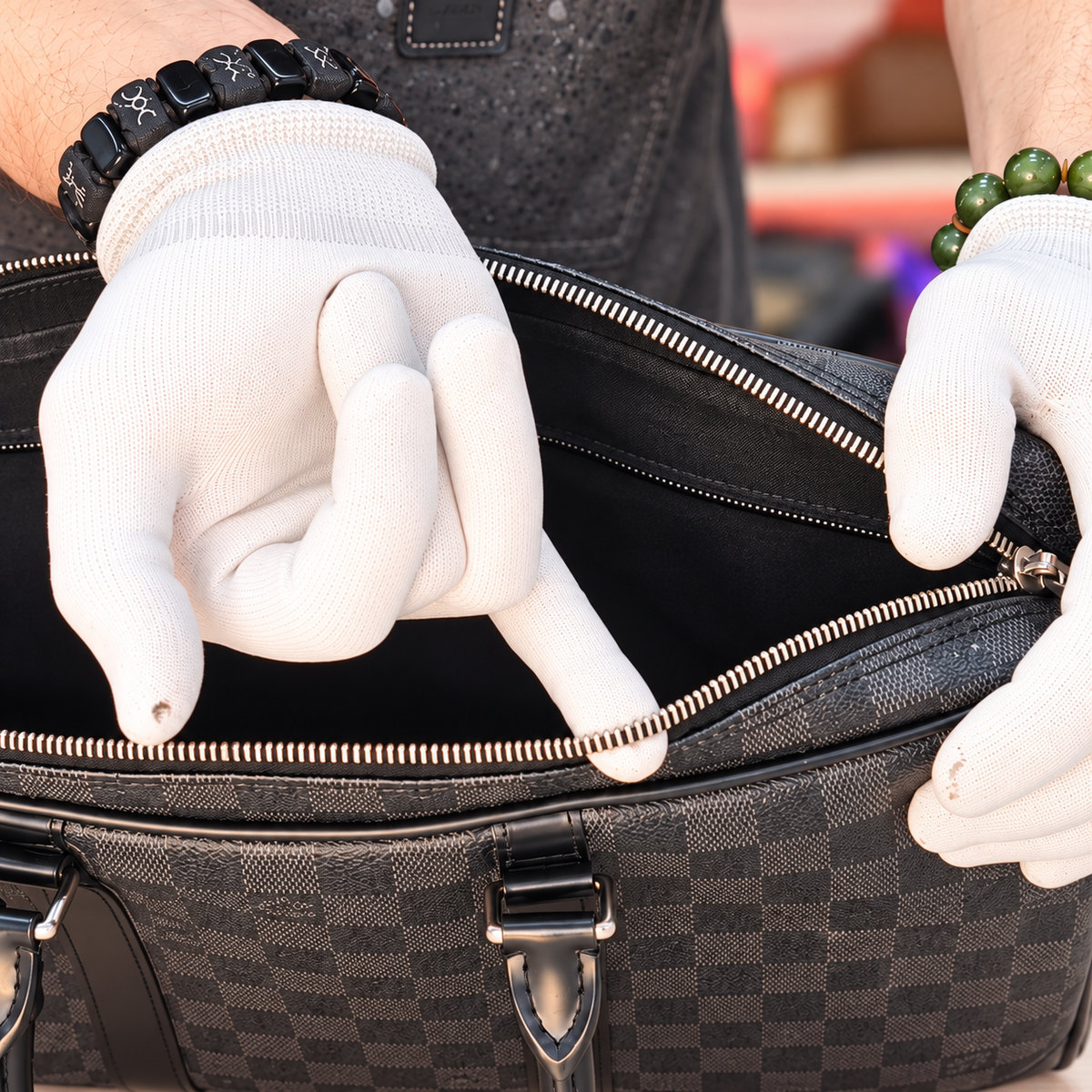
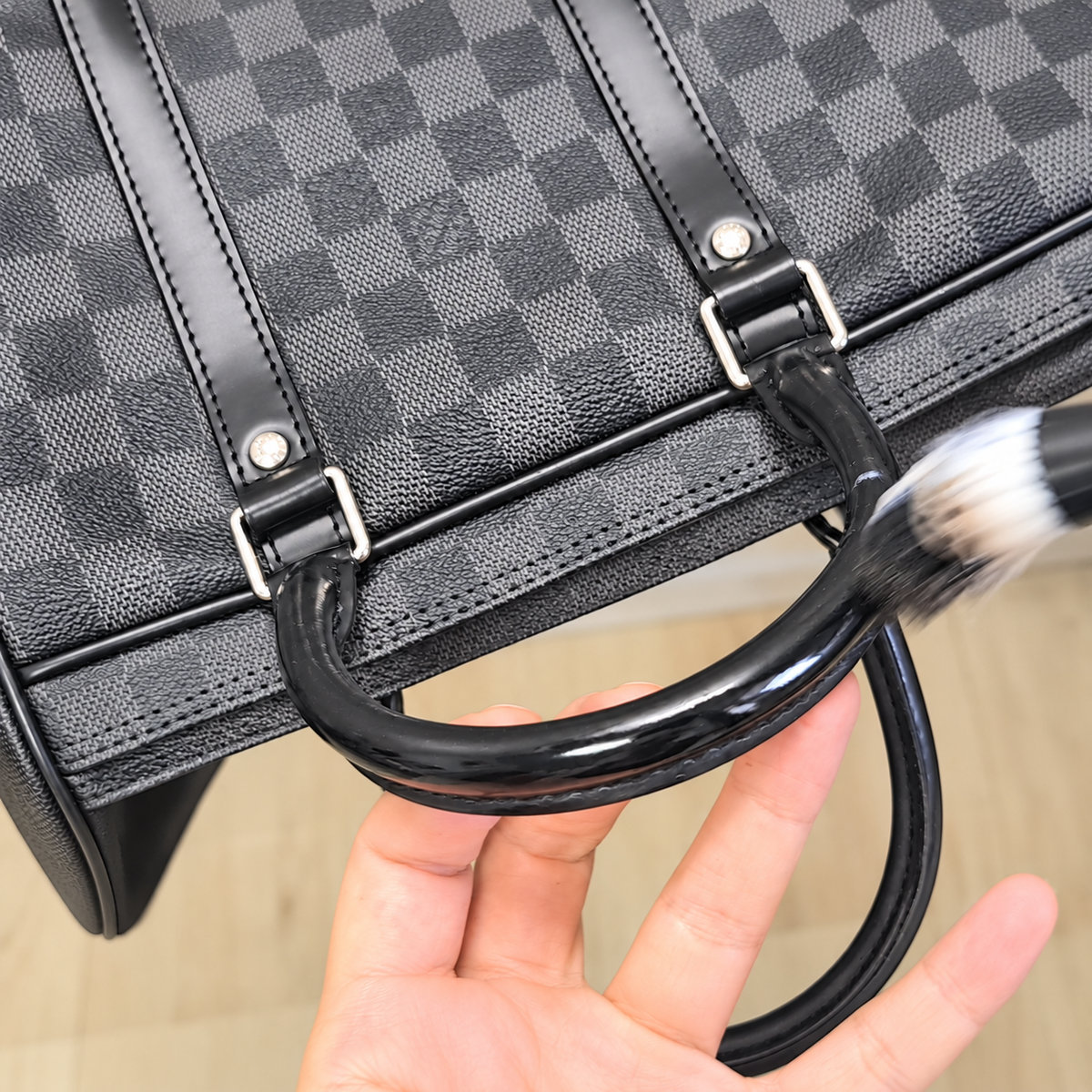
This Louis Vuitton men’s briefcase arrived at my workshop from a returning customer. He had already brought several items to me for restoration. This time, his main concern was the zipper: the fabric tape had worn through and developed a hole. The corners were worn as well, and the leather handles were heavily contaminated with oils and had patches of damaged finish.
Why the zipper needed complete replacement
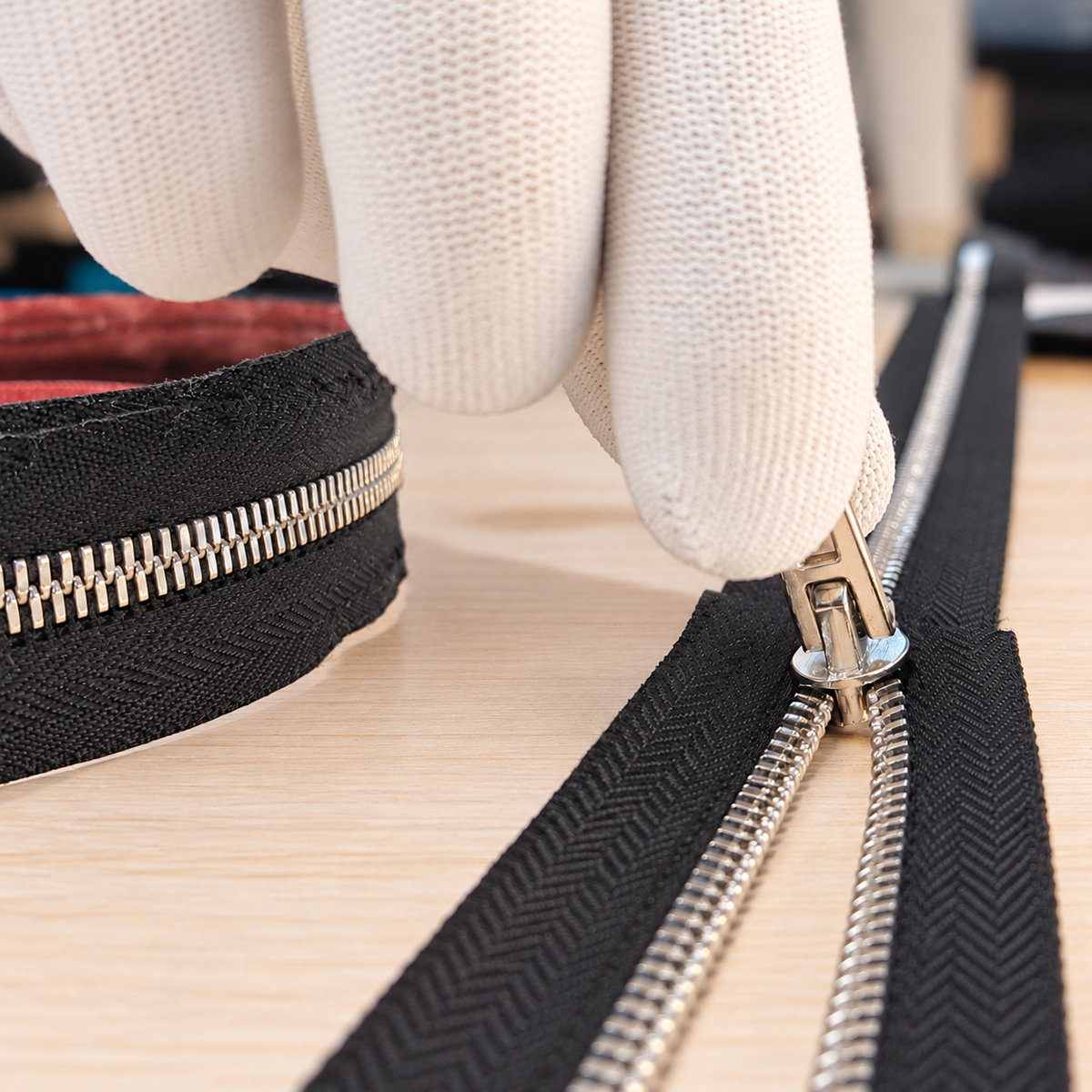
A zipper consists of teeth, sliders and the fabric tape that carries the teeth and allows the zipper to be attached to the bag. On this briefcase, it was the fabric tape that had torn in the area repeatedly contacted by the slider. The material had lost its integrity. Adjusting or changing the slider could not restore the torn fabric, so the entire zipper needed to be replaced.
Finding a replacement was not straightforward. The original Louis Vuitton zipper had its own tooth shape, and I could not obtain an identical part through normal retail suppliers. I selected a commercially available zipper with a different tooth profile but a crucial advantage: the original Louis Vuitton sliders fit and travel along it correctly. They move a little less smoothly than they did on the original zipper, but they work and the branded sliders could be retained.
Replacing a zipper on an already assembled briefcase
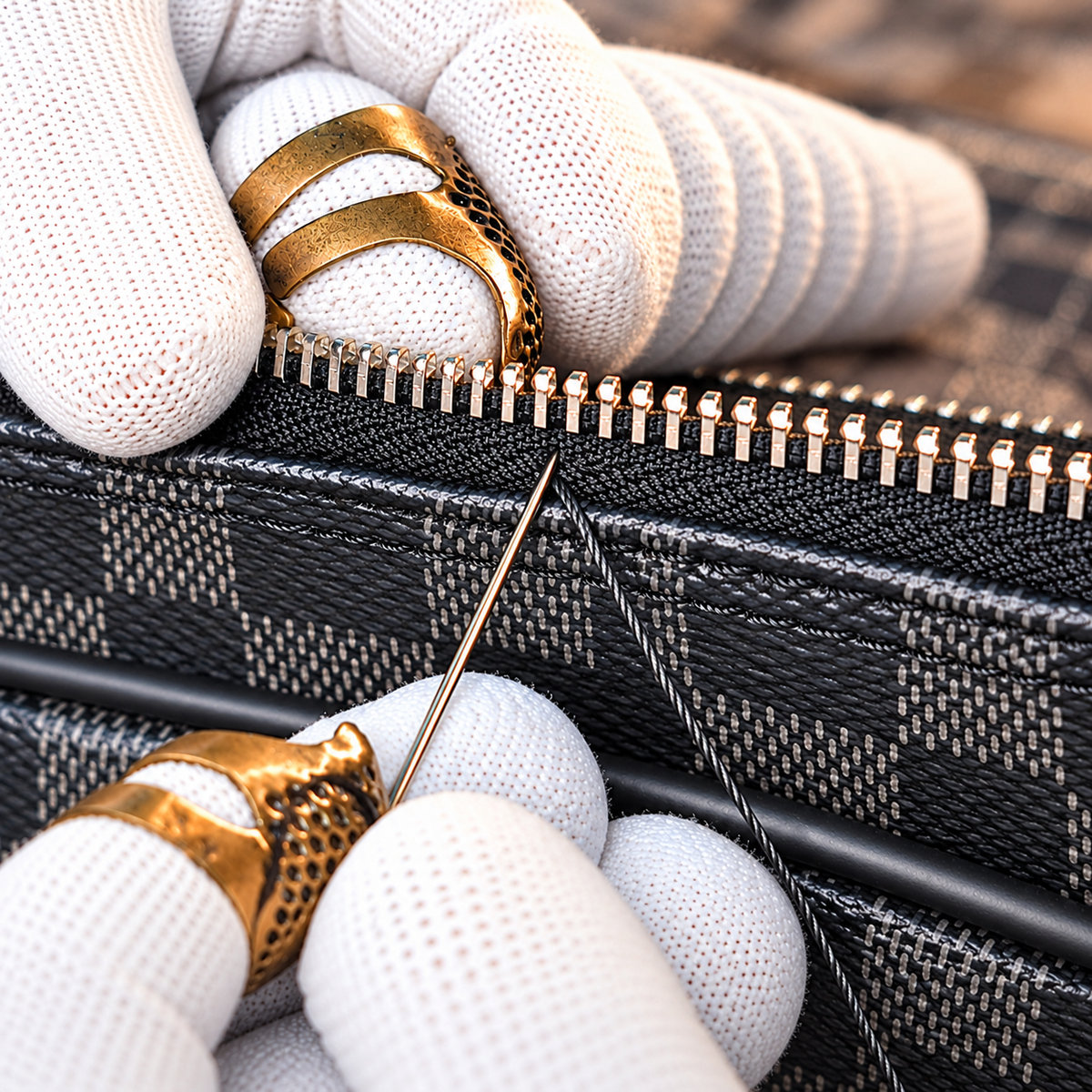
In bag manufacturing, the zipper is usually sewn to individual components before the whole bag is assembled. Here I was working with a finished briefcase. Completely dismantling the upper section to machine-stitch the new zipper would have taken much more work, followed by reassembly.
Instead, I positioned the replacement and carefully secured it with adhesive so it would stay in place during sewing. I then stitched the zipper by hand. One seam joins three layers: the zipper tape, the bag edge and the lining. This allowed me to replace the damaged zipper without taking the whole briefcase apart.
Restoring the worn corners starts with cleaning
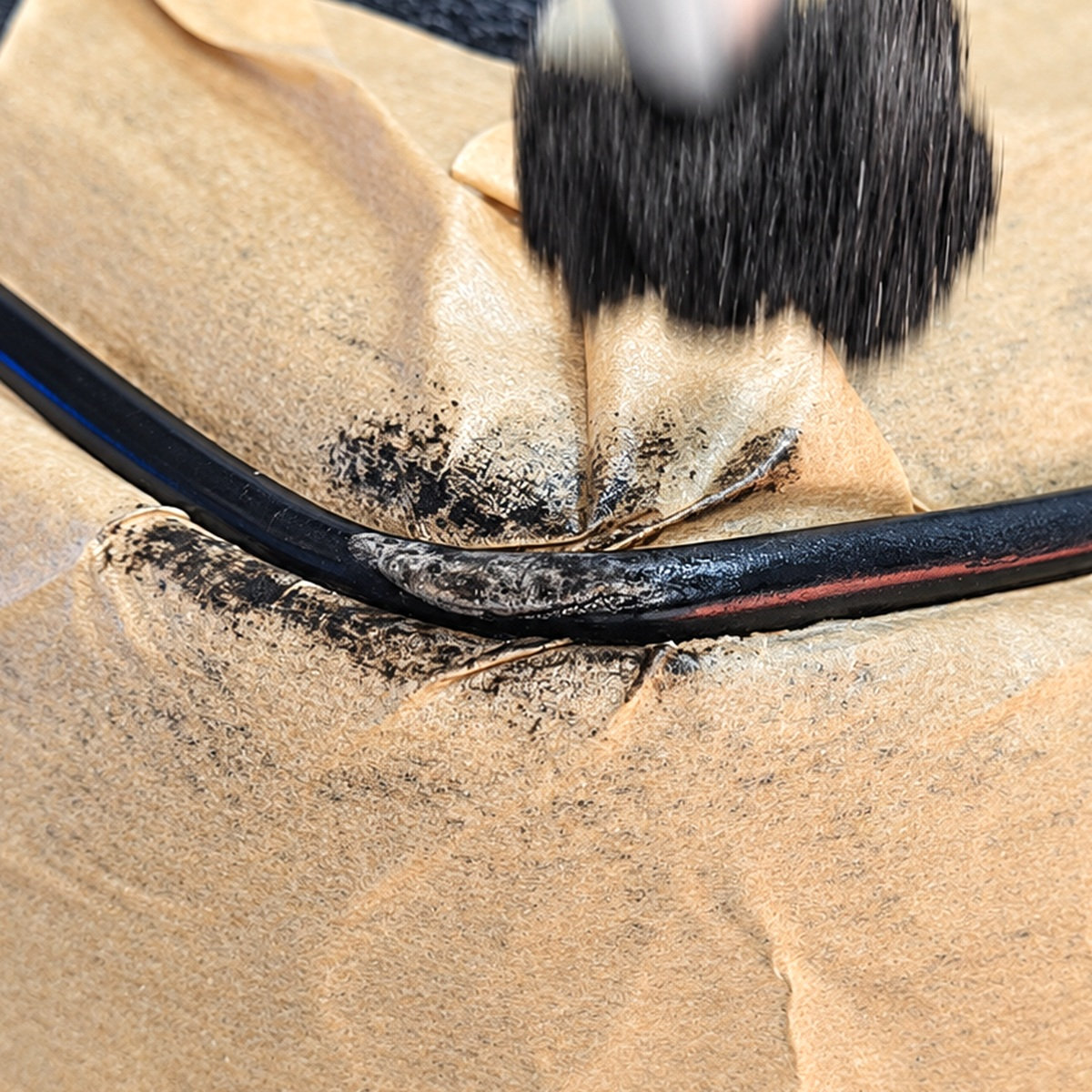
Bag corners come into contact with clothing, furniture and other surfaces throughout everyday use. The coating gradually wears, and household dirt accumulates in the damaged areas. That was also the case here.
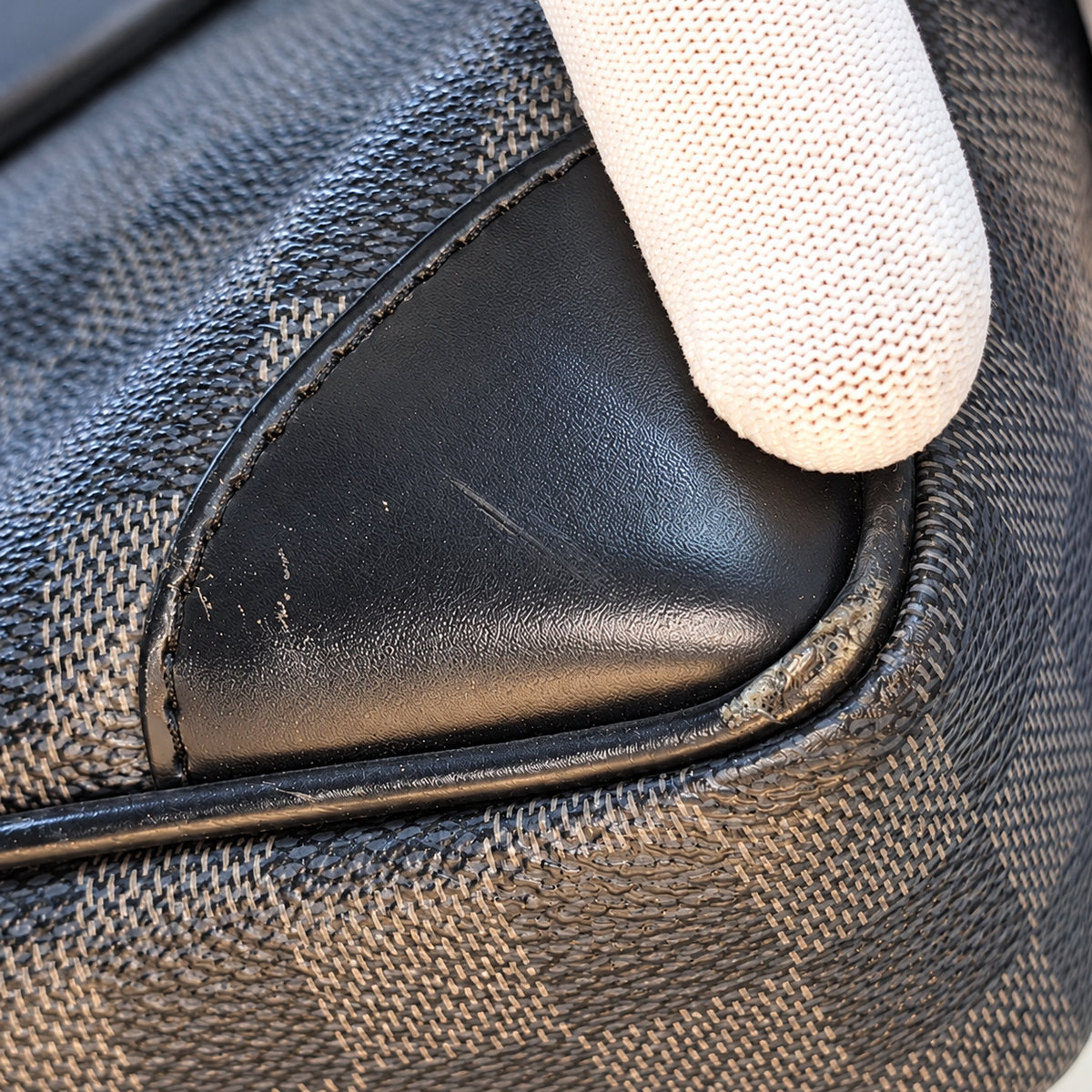
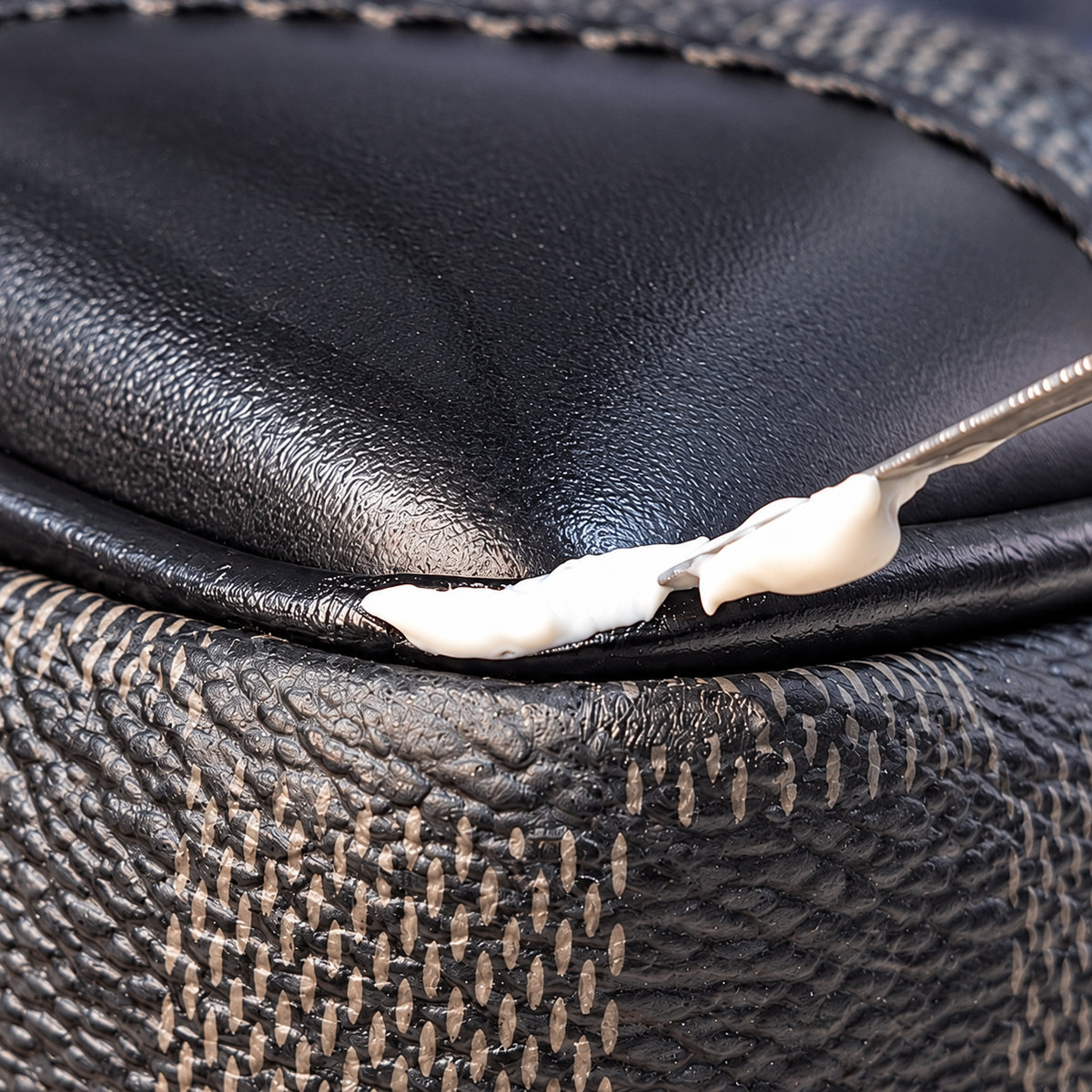
Applying repair filler or paint directly onto that dirt would be a mistake: contamination prevents repair products from bonding properly to the surface. I first cleaned even the visibly worn sections. Only then did I use a liquid repair filler, often called “liquid leather,” to fill the small losses and level the surface. I mixed a grey-black colour to match the original appearance of the briefcase and refinished the repaired corners.
Why the leather handles could not simply be repainted
The handles had absorbed skin oils during use, and part of the original colour coating had worn away or peeled. Before cleaning, those defects were easy to miss because greasy black areas blended into the dark finish. Once the surface was cleaned, the damaged coating became much more noticeable.
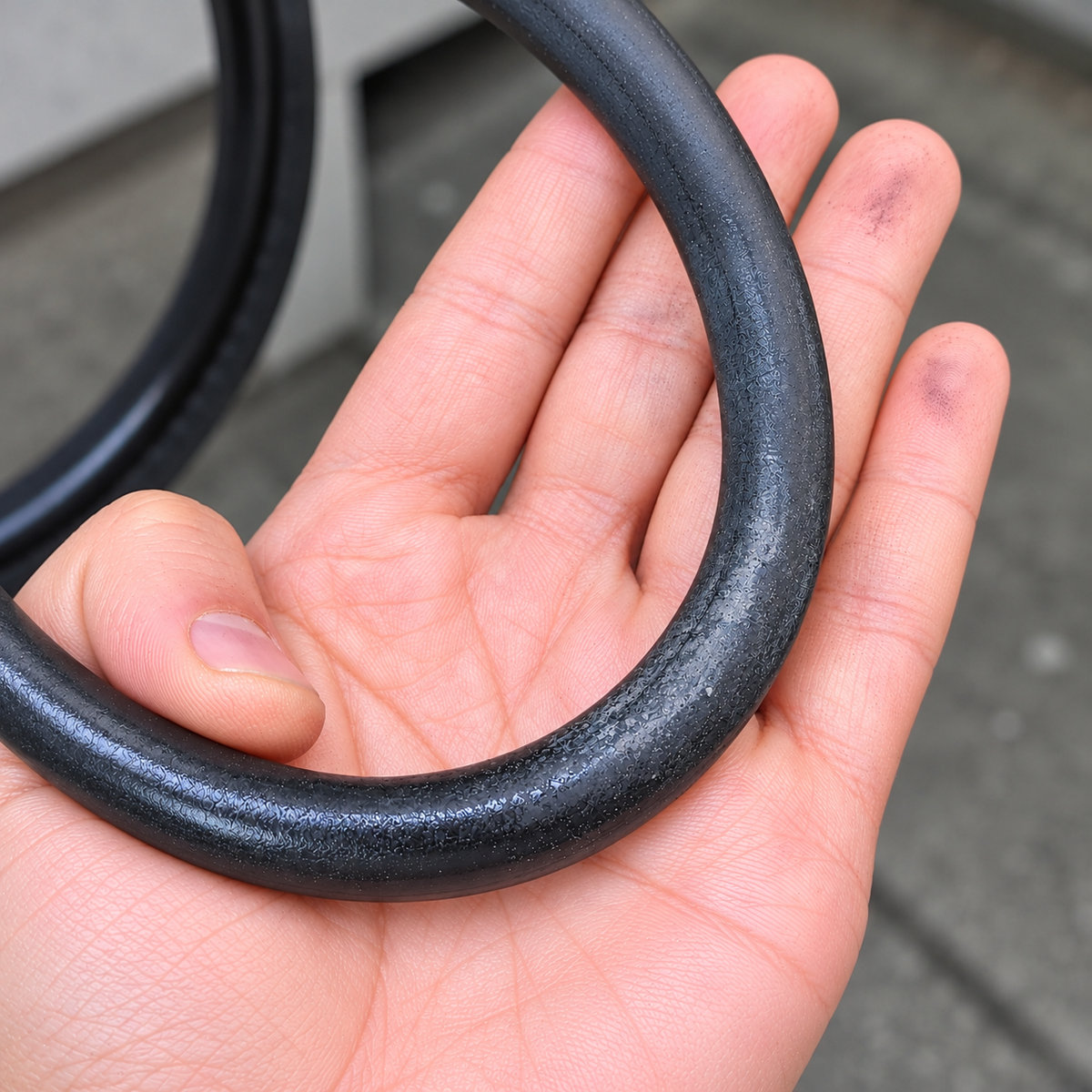
Fresh paint applied to oily leather may not adhere reliably. This is why I used specialist degreasing pastes to remove the absorbed oils before attempting any refinishing. Only after that preparation could the restored surface hold a new coating.
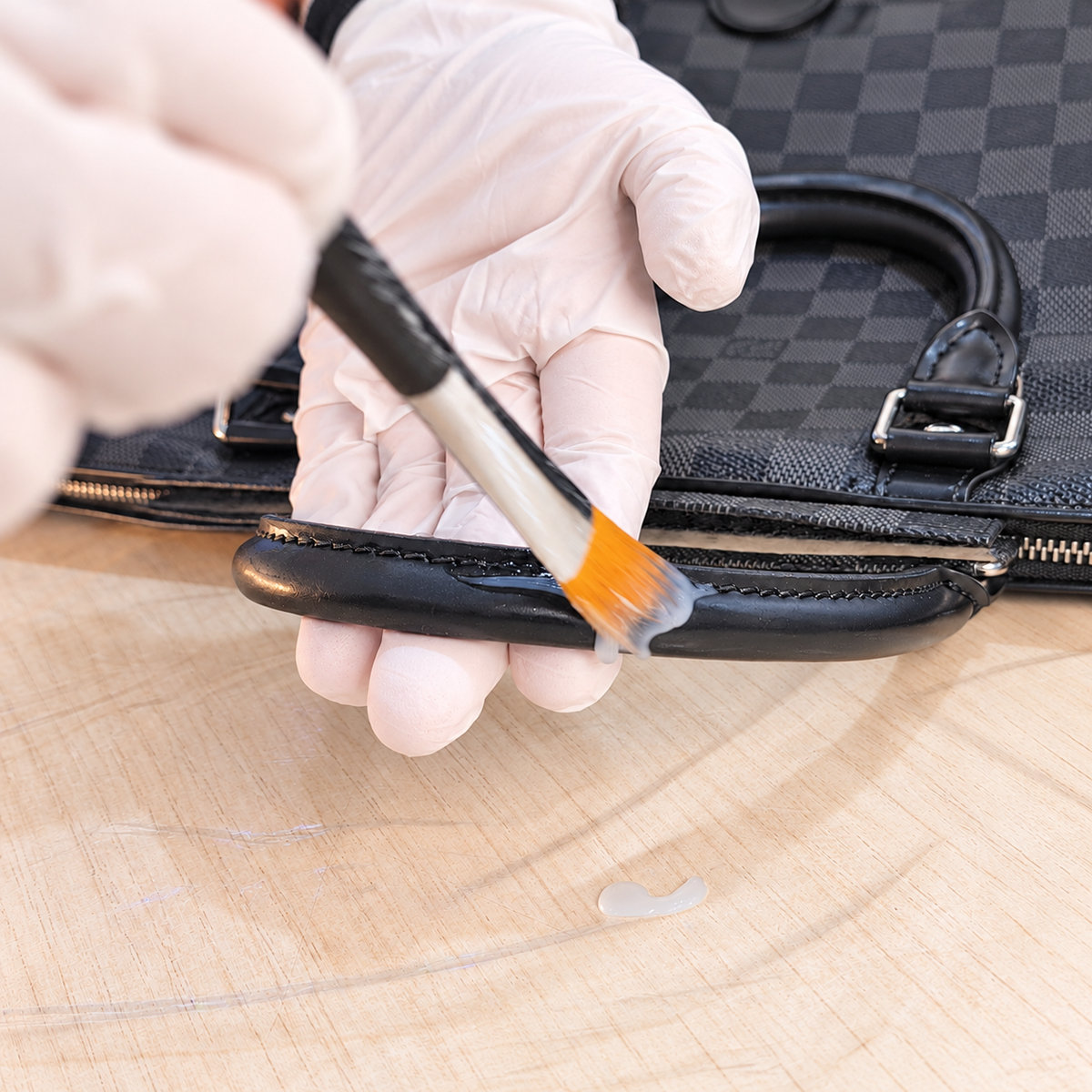
I reinforced the damaged areas, sanded the leather through several stages and restored the handle edges. I kept the original stitching and protected the threads before painting to avoid staining them. Once the surface was ready, I matched the colour, refinished the handles and applied a protective finishing coat.
Three problems, three different techniques
The torn zipper fabric required complete replacement, but the original LV sliders could be reused. The corners needed careful cleaning, local filling and colour matching. The leather handles had to be degreased before any new coating could be applied. No single treatment would have solved all three problems.
After the work, the briefcase was functional again, with its worn areas restored. The owner is a regular customer, and this is not the only item I have worked on for him. In future articles I will show several more of his pieces and explain the different repairs they required.
More workshop restoration notes: an alligator leather watch strap rebuild.